
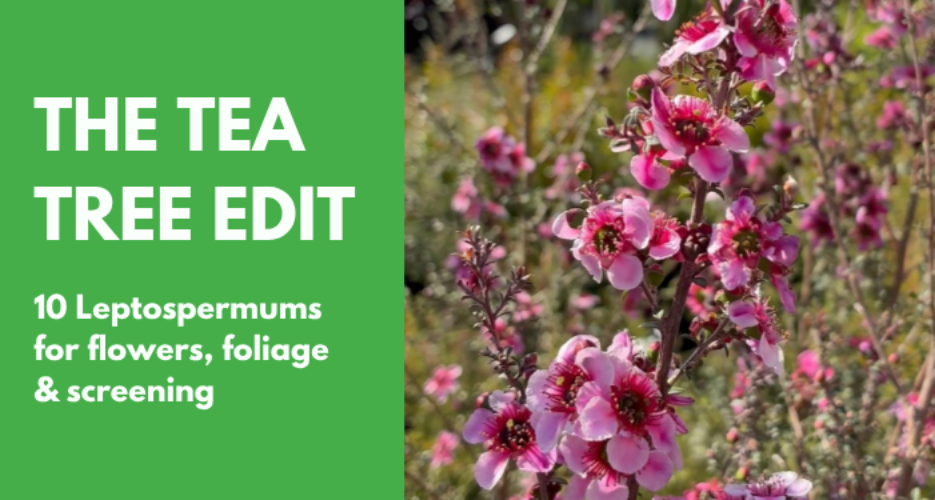
Leptospermums are one of those plant groups that are easy to underestimate.
They’re often thought of as hardy native screening plants, but look a little closer and there’s much more going on. Tea Trees range from compact and cascading forms to fast-growing screens, with flowers in white, pink and deep red and foliage that can be green, silver, copper or burgundy.
Many put on an impressive flower display through spring and summer, while others earn their place through aromatic foliage, strong form or year-round screening.
For landscapers, that makes Leptospermums a surprisingly versatile group of plants for hedging, screening, feature planting and wildlife-friendly landscapes.
Why use Leptospermums in Australian landscapes?
When Leptospermums come into flower, it’s easy to see why they deserve more attention.
The individual flowers may be small, but they can appear in such numbers that whole branches become covered in white, pink or deep red. On some varieties, the branches almost disappears beneath the flowers.
But flowers are only part of the story.
Across the range you’ll also find copper, burgundy and silver foliage, aromatic leaves, cascading forms, compact shrubs and some seriously useful screening plants.
That means Leptospermums can answer very different landscape briefs.
Need a fast-growing native screen? There are several options.
Looking for contrasting foliage to break up a predominantly green planting palette? Tea Trees can bring silver, copper and burgundy into the mix.
Need something smaller, softer or more ornamental? Compact and cascading varieties give you those options too.
Depending on the variety, Leptospermums can be useful for:
Screening and privacy
Formal and informal hedging
Coastal landscapes
Windbreaks
Feature planting
Smaller gardens
Native and habitat planting
Colourful foliage contrast
Pollinator-friendly landscapes
Year-round structure
Many are evergreen, hardy and relatively low maintenance once established, adding to their value across residential and commercial landscape projects.
Why are they called Tea Trees?
The name Tea Tree comes from the leaves.
Early European settlers used leaves from some Leptospermum species to make a tea-like drink, helping establish the common name we still use today.
Aromatic foliage is another characteristic you’ll find across the group. Crush the leaves of some varieties and the scent is immediately noticeable.
Leptospermum petersonii is particularly well known for its fresh lemon-scented foliage, while Leptospermum flavescens Cardwell also contains aromatic essential oils that can be used in products such as candles and soaps, as well as herbal tea.
Leptospermums are good news for pollinators too
Those masses of little flowers aren’t only there for us to enjoy.
Leptospermums are particularly rich in nectar, making flowering Tea Trees a useful food source for bees and other visiting insects.
They are also regularly included among plants recommended for Australian native bees. That includes tiny native stingless bees such as Tetragonula carbonaria, found along Australia’s east coast, as well as the many solitary native bee species that forage through our gardens and landscapes.
That gives flowering Leptospermums another role in habitat and pollinator-friendly planting, particularly when they’re combined with other native plants that flower at different times of year.
And then there’s the honey connection.
Australia produces manuka honey from our native Leptospermums, with bees collecting nectar from their flowers. In fact, Australia is home to more than 80 native Leptospermum species, with several known to produce highly active honey.
Leptospermum scoparium is the species most closely associated with New Zealand mānuka honey, but a number of Australian Tea Trees also contribute to manuka honey production.
It’s another reason those seemingly small Tea Tree flowers are more significant than they first appear.
Different Leptospermums also flower at different times. Some put on their biggest display through winter and spring, while others continue well into summer.
Using several flowering varieties can therefore help extend both seasonal colour and potential pollinator resources through the landscape.
Our top 10 Leptospermums for Australian landscapes
So which Leptospermum should you plant?
That depends on what you need it to do.
Some are standout screens. Others stay compact, cascade naturally or earn their place through foliage colour alone.
Here are 10 varieties our Plantmark team thinks are worth knowing.
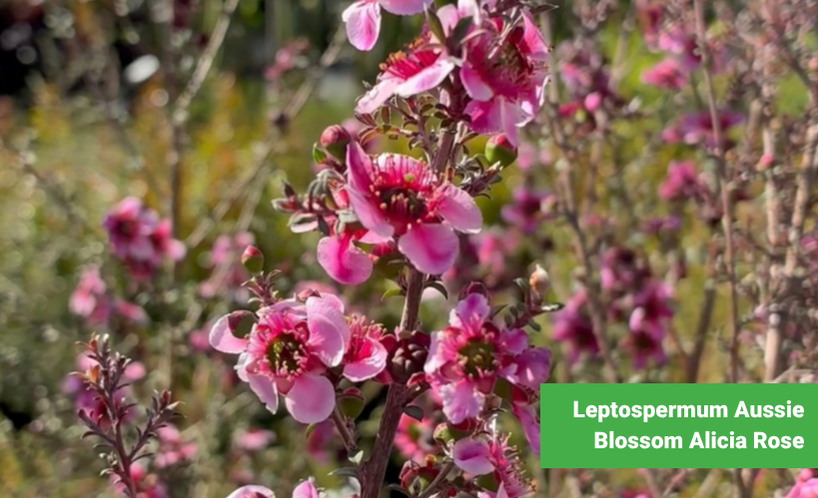
1. Leptospermum hybrida Aussie Blossom Alicia Rose
Tea Tree or Australian Cherry Blossom
Rose-pink blossom with plenty of pollinator appeal.
Why we love it: When this one is covered in rose-pink flowers, Australian Cherry Blossom feels like a pretty fitting name.
Aussie Blossom Alicia Rose is a compact, bushy Tea Tree that puts on a beautiful flower display through winter and spring. Once flowering finishes, aromatic evergreen foliage keeps the plant looking neat and structured.
Best for: Informal hedging, compact native planting, borders and pollinator-friendly gardens.
Size and position: Approximately 1m high. Best in full sun and well-drained soil.
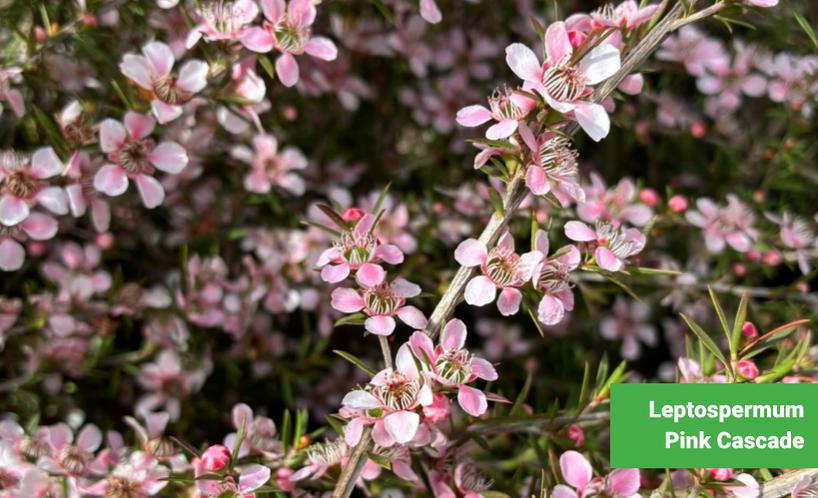
2. Leptospermum hybrida Pink Cascade
Tea Tree
Cascading branches smothered in soft pink spring flowers.
Why we love it: The name tells you exactly what makes this one different.
Rather than the upright form associated with many Tea Trees, Pink Cascade has pendulous branching that creates a softer, cascading shape. In spring, small pink flowers appear right along the stems.
Best for: Smaller gardens, borders, informal planting and areas where a softer spreading form is wanted.
Size and position: Approximately 80cm high x 1–1.5m wide. Suitable for full sun to semi-shade in well-drained soil.
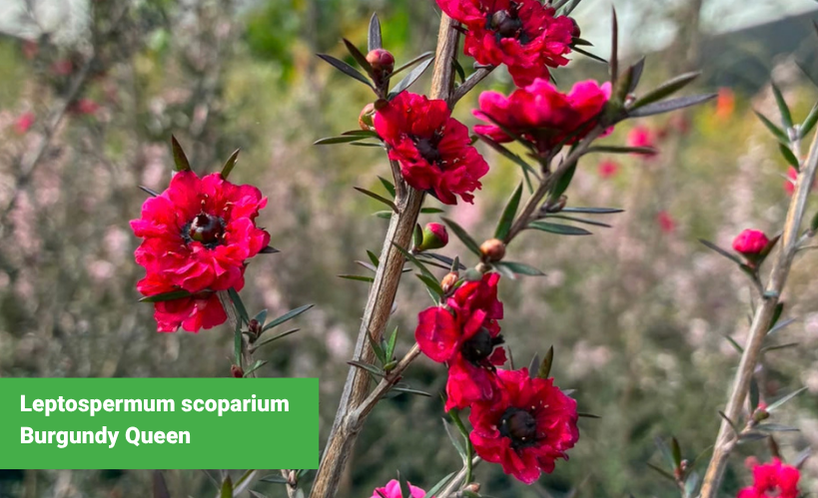
3. Leptospermum scoparium Burgundy Queen
Manuka Myrtle / New Zealand Tea Tree
Dark foliage with masses of deep red double flowers.
Why we love it: Leptospermum Burgundy Queen brings colour even when it isn’t flowering.
Fine burgundy-toned foliage provides strong year-round contrast, then masses of deep magenta double flowers add another layer through winter and spring.
It’s a particularly useful choice when the planting palette needs something deeper than green.
Best for: Screening, flowering hedges, coastal landscapes and foliage contrast.
Size and position: Approximately 3–4m high x 2–3m wide. Suitable for full sun to semi-shade with good drainage.
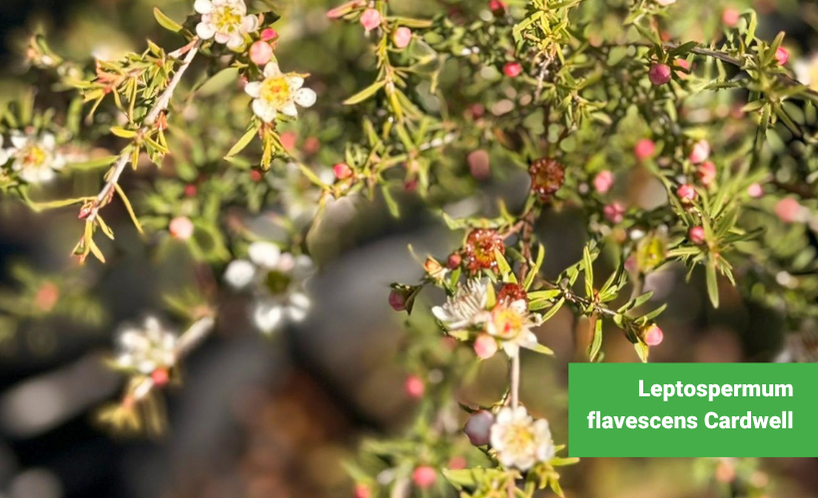
4. Leptospermum flavescens Cardwell
Tea Tree
A fast-growing screen with aromatic foliage and white flowers from winter into summer.
Why we love it: Need to establish a screen without waiting forever?
Leptospermum Cardwell is a fast-growing Tea Tree with dense evergreen foliage and gently pendulous branching. Small white flowers begin appearing from late winter and can continue right through to summer.
Its aromatic foliage contains essential oils that can be used in candles and soap making, as well as herbal tea.
That combination of quick growth, evergreen coverage, aromatic foliage and a long flowering period makes Cardwell a very practical landscape plant.
Best for: Fast-growing screens, informal hedges, windbreaks and smaller gardens.
Size and position: Approximately 2m high x 2m wide. Performs in full sun to semi-shade and prefers good drainage.
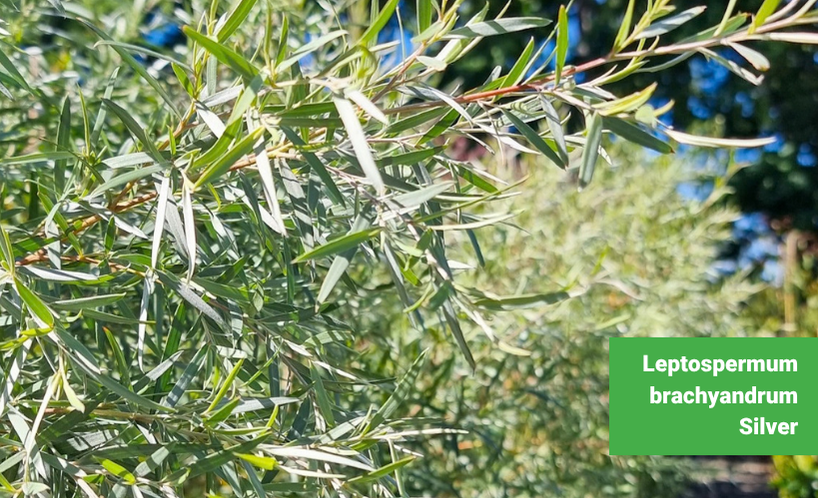
5. Leptospermum brachyandrum Silver
Silver Weeping Tea Tree
Soft weeping form with standout silver foliage contrast.
Why we love it: Not every feature in the landscape needs to come from flowers.
Leptospermum Silver brings silvery foliage and a graceful weeping habit into the mix, creating beautiful contrast against deeper greens.
Small white spring flowers are almost a bonus.
Best for: Larger landscape beds, screening and anywhere you want silver foliage to break up surrounding greenery.
Size and position: Approximately 4–6m high x 4m wide. Best in full sun with good drainage.
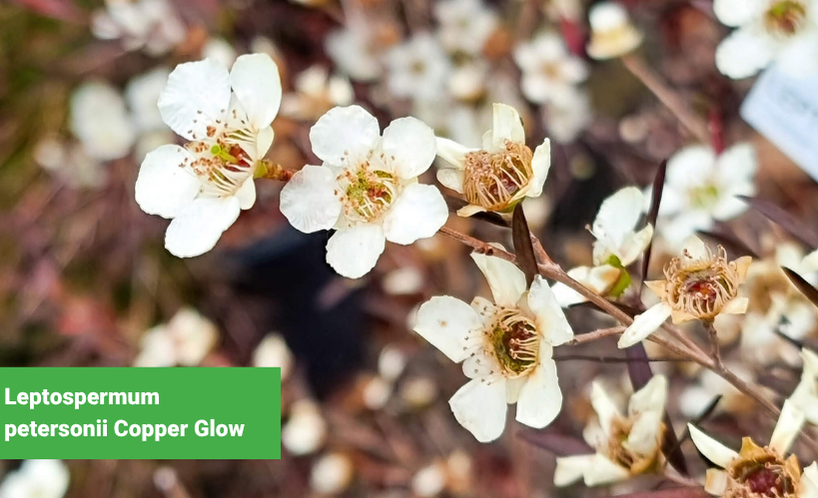
6. Leptospermum petersonii Copper Glow
Lemon Scented Tea Tree
Copper-toned foliage with fresh white spring flowers.
Why we love it: Copper Glow earns its place well before the flowers arrive.
Warm copper-coloured foliage provides useful contrast against surrounding green planting, making it particularly effective when you want to introduce another foliage colour into a predominantly green landscape.
The aromatic leaves release the characteristic lemon scent associated with Leptospermum petersonii, then masses of white flowers add another change of colour in spring.
Best for: Screening, hedging, coastal gardens, foliage contrast, fragrant planting and wildlife-friendly landscapes.
Size and position: Approximately 3m high x 3m wide. Suitable for full sun to semi-shade with good drainage.
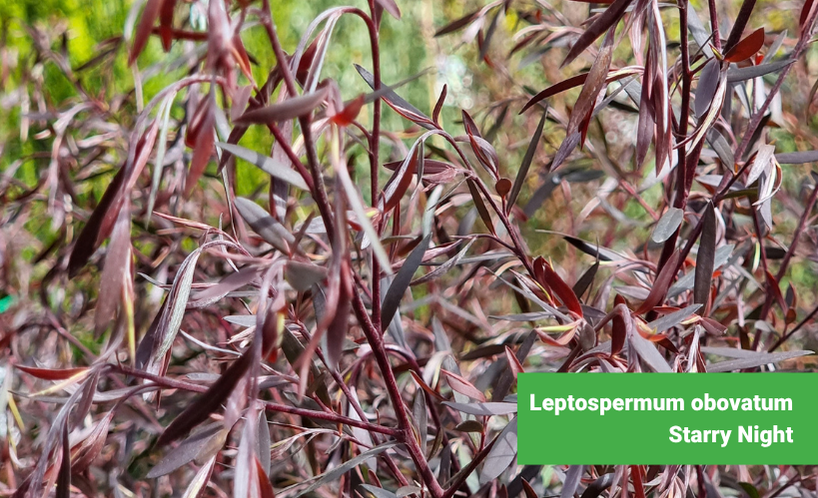
7. Leptospermum obovatum Starry Night
Tea Tree
One of the best native screens, with dark foliage and white flowers.
Why we love it: There’s a reason Leptospermum Starry Night is one of our favourite native screening plants.
Glossy black-purple foliage gives it strong year-round presence, then masses of starry white flowers create striking contrast from late spring into summer.
Starry Night also responds well to pruning and clipping, making it easy to shape and maintain as a dense hedge or screen.
That combination of dark foliage, flower colour and an easily managed form makes it a particularly useful landscape plant.
Best for: Screening, shaped hedges, paths, large containers and concealing fences, sheds or service areas.
Size and position: Approximately 2m high x 1.5m wide. Suitable for full sun to light shade and adaptable to a range of well-drained soils.
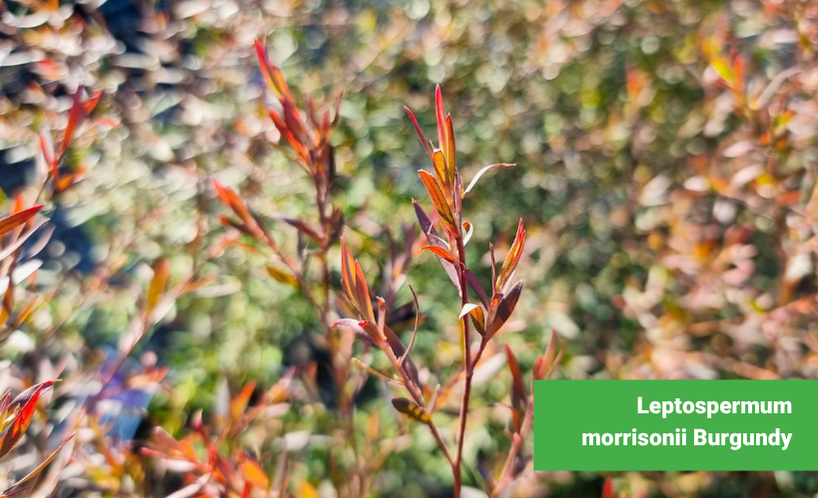
8. Leptospermum morrisonii Burgundy
Tea Tree
Burgundy foliage with an abundance of large white summer flowers.
Why we love it: Leptospermum Burgundy turns the usual Tea Tree colour combination on its head.
Dark burgundy foliage creates the backdrop, followed by an abundance of large white flowers through summer.
The foliage is useful beyond the landscape too. Cut stems can be brought indoors and used in floral arrangements.
Its fast growth also makes Burgundy a useful screening and hedging option.
Best for: Screening, hedging, background planting, foliage contrast and cut foliage.
Size and position: Approximately 2–4m high and wide. Suitable for full sun to semi-shade in well-drained soil.
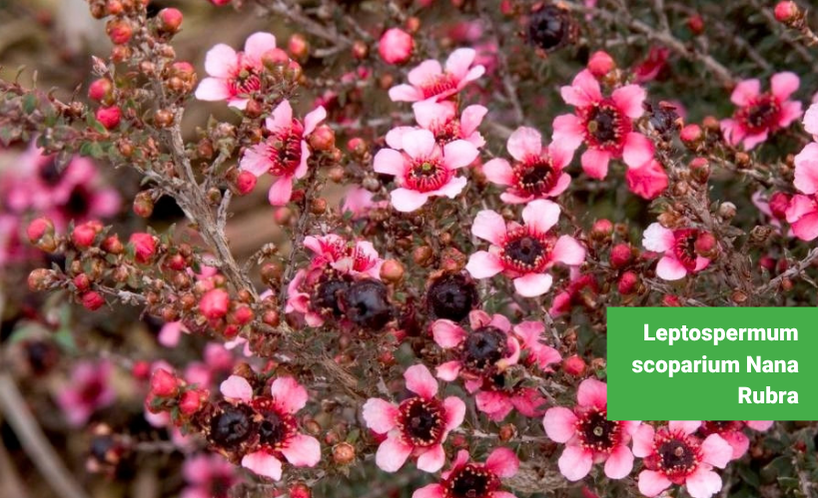
9. Leptospermum scoparium Nana Rubra
Dwarf Red Tea Tree / Manuka Myrtle / New Zealand Tea Tree
A dwarf Tea Tree made for smaller spaces.
Why we love it: Not every Leptospermum needs room to become a screen.
Nana Rubra is a dwarf variety growing to around 1m high, making it a useful option for smaller gardens, compact landscape areas and lower planting.
Bronze aromatic foliage gives it colour outside the flowering season, while masses of red flowers appear through winter and spring.
Best for: Small gardens, borders, low informal hedges and compact flowering plantings.
Size and position: Approximately 1m high. Best in full sun to part shade with well-drained soil.
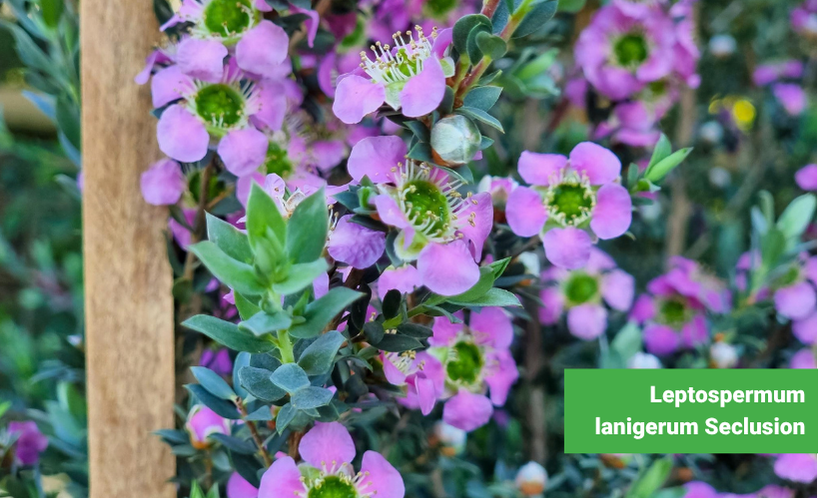
10. Leptospermum lanigerum Seclusion
Woolly Tea Tree
Grey-green foliage with masses of pale pink-lilac flowers.
Why we love it: Leptospermum Seclusion is rather aptly named.
This fast-growing Tea Tree forms a dense shrub that works particularly well when the goal is privacy, shelter or separation within a landscape.
Its grey-green aromatic foliage provides year-round coverage, while masses of pale pink to lilac flowers soften the plant when it comes into bloom.
Best for: Privacy screens, formal or informal hedges, windbreaks and larger native gardens.
Size and position: Approximately 2.5m high x 1.5m wide. Suitable for full sun to semi-shade in loamy or sandy, well-drained soil.
Which Leptospermum is best for screening?
Several Leptospermums make excellent screens. The best one depends on how quickly you need coverage, the finished height and the foliage effect you want.
For dark foliage, Starry Night is one of our favourites, combining black-purple leaves with white late spring and summer flowers. It also responds well to regular clipping, making it easy to form and maintain as a dense hedge.
Leptospermum Copper Glow creates a larger screen with warm copper foliage, while Burgundy Queen combines screening height with burgundy foliage and deep red flowers.
Need faster coverage? Leptospermum Cardwell, Rudolph and Leptospermum morrisonii Burgundy are useful fast-growing choices.
And if privacy is the main objective, Seclusion is aptly suited to dense screens, hedges and windbreaks.
Which Leptospermums are best for smaller gardens?
You don’t need room for a large Tea Tree to use Leptospermums successfully.
Leptospermum Nana Rubra is a dwarf variety growing to approximately 1m, while Aussie Blossom Alicia Rose and Leptospermum Merinda with its vibrant magenta spring flowers, are other compact options at around 1m high. Another smaller growing variety is Leptospermum Rhiannon, growing to approx. 1.5m heigh and 1m wide.
Pink Cascade stays low too, with its pendulous habit spreading outward rather than developing into a large upright shrub.
These smaller forms work particularly well through borders, courtyard gardens and compact landscape projects where flower colour is wanted without the bulk of a larger screen.
Looking for foliage colour rather than just flowers?
Leptospermums are surprisingly useful foliage plants.
Starry Night brings almost black-purple foliage. Copper Glow introduces warm copper tones. Burgundy Queen and Leptospermum morrisonii Burgundy add deeper red and burgundy shades, while Leptospermum brachyandrum Silver takes the palette in the opposite direction with silvery foliage.
That range makes Tea Trees useful for creating contrast throughout the year rather than relying solely on a short flowering window.
Which Leptospermums flower into summer?
Tea Tree season doesn’t necessarily finish when spring does.
Leptospermum Cardwell can produce white flowers from late winter through to summer.
Leptospermum morrisonii Burgundy produces its large white flowers during summer, while Starry Night carries its starry white flower display from late spring into summer. Another summer flowering variety is Leptospermum Rudolph, known to flower through the Christmas period, providing a display of large, red flowers.
Combining cultivars with different flowering periods is one way to extend both seasonal colour and pollinator resources through a landscape.
How to grow Leptospermums
Leptospermums have a reputation for being tough and relatively easy-care, but as with any plant, the right variety in the right position will perform best.
Light
Most Leptospermums flower most strongly in full sun.
Many varieties will also tolerate semi-shade, including Pink Cascade, Burgundy Queen, Cardwell, Copper Glow, Starry Night, Burgundy, Nana Rubra and Seclusion.
Soil and drainage
Good drainage is important for most commonly grown Leptospermums.
They can be adaptable to different soil types, but prolonged waterlogging can create problems.
Always check the requirements of the individual variety, particularly when planting into challenging sites.
Good drainage is important for most commonly grown Leptospermums.
They can be adaptable to different soil types, but prolonged waterlogging can create problems.
Always check the requirements of the individual variety, particularly when planting into challenging sites.
Watering
Water newly planted Leptospermums regularly while their root systems establish.
Once established, many are resilient and tolerate dry periods well, although drought tolerance varies between species, cultivars, soils and climates.
Mulching can help protect the soil surface, moderate temperature and reduce moisture loss during establishment.
Pruning
Don’t be afraid to give many Leptospermums a light prune.
Trimming after flowering can encourage denser branching and help maintain the desired shape.
For screens and hedges such as Starry Night, Seclusion and Copper Glow, regular light pruning can help create a fuller, denser plant.
Feeding
If your Leptospermums need feeding, use a fertiliser formulated for Australian native plants and follow the recommended application rate.
Spring is a useful time to assess plants as fresh growth begins.
Plantmark stocks native plant foods, fertilisers and potting mixes suitable for Australian native plants, including Searles Native Plant Food and Grow Better Native Fertiliser.
Frequently asked questions about Leptospermums
1. Are Leptospermums Australian natives?
Most Leptospermum species occur naturally in Australia, although the genus is also represented in New Zealand and other parts of the wider Asia-Pacific region.
Leptospermum scoparium varieties are particularly associated with New Zealand, where it is known as mānuka, but the species also occurs naturally in south-eastern Australia.
2. Why is Leptospermum called Tea Tree?
The common name comes from early European settlers using leaves from some Leptospermum species to make a tea-like drink.
3. Do Leptospermums attract bees and other pollinators?
Yes. Leptospermum flowers are particularly rich in nectar and can provide a useful food source for bees and other visiting insects.
Leptospermums are also included among plants recommended for native bees, making them a useful addition to pollinator-friendly landscapes.
4. Is Leptospermum used to make manuka honey?
Yes, and manuka honey is produced in Australia as well as New Zealand.
Australian manuka honey is produced by bees collecting nectar from plants in the Leptospermum genus. Australia has more than 80 native Leptospermum species, and research has identified several species that can produce highly active honey.
Leptospermum scoparium is particularly associated with New Zealand mānuka honey, while Australian manuka honey can be produced from a number of Leptospermum species.
5. Are Leptospermums good screening plants?
Many are excellent screening plants.
Leptospermum Starry Night, Copper Glow, Burgundy Queen, Cardwell, Burgundy and Seclusion are particularly useful when screening or hedging is required.
Starry Night is especially easy to clip and shape, making it a good option when a more defined hedge is wanted.
Check the mature size carefully, as Leptospermums range from dwarf shrubs to substantially larger plants.
6. Do Leptospermums need full sun?
Most perform best and flower most heavily in full sun, although many varieties also tolerate part shade or semi-shade.
7. Are Leptospermums drought tolerant?
Many established Leptospermums tolerate dry conditions well.
New plants still need consistent watering while establishing, and drought tolerance varies according to species, cultivar, soil and climate.
8. When do Leptospermums flower?
Flowering time varies considerably by cultivar.
Many put on their strongest display through winter and spring, while others continue flowering into summer.
Cardwell can flower from late winter through summer, Burgundy produces large white flowers in summer and Starry Night flowers from late spring into summer.
9. Can Leptospermums be grown in pots?
Yes. Compact Leptospermums can grow well in large pots with good drainage.
Suitable varieties include Leptospermum Rhiannon, Nana Rubra, Pink Cascade, Aussie Blossom Alicia Rose and Aussie Blossom Naoko.
Use a quality potting mix suitable for Australian native plants, such as Searles Native Potting Mix or Grow Better Native Potting Mix and remember that container-grown Tea Trees will generally need more regular watering than those planted in the ground.
Find Leptospermums at Plantmark
Looking for Leptospermums for an upcoming landscape project?
Plantmark stocks a broad range of Tea Trees across our wholesale nurseries in Melbourne, Brisbane and the Gold Coast, including compact flowering forms, colourful foliage varieties and fast-growing screening plants.
Head to Plant Finder to check current availability and pot sizes at your preferred Plantmark location, then visit soon to see the range for yourself.
For larger landscape projects, bulk quantities or plants that aren’t currently available at your preferred location, request a quote or speak with your closest Plantmark Quotes & Orders team. We can assist with sourcing and arrange delivery directly to your landscape project.
Plantmark is a wholesale nursery. Trade only.
Related reading
Top Spring Plants from Plantmark
Pollinators Welcome: Our Top 10 Perennials for Pollinator-Friendly Summer Gardens
Leave your comment