
_935.png "Westringia varieties: 10 Native Rosemary picks and what makes them different")
Westringia varieties: 10 Native Rosemary picks and what makes them different
Westringia, commonly known as Native Rosemary or Coastal Rosemary, is one of the most versatile Australian native shrubs for landscaping, with varieties suited to hedging, clipped spheres, groundcovers, mass planting and coastal landscapes.
But with so many different cultivars available, what’s the difference?
Foliage can range from deep green to silvery grey and variegated forms, while the small, orchid-like flowers can be white, soft lilac, mauve or deep purple. Some varieties stay compact, others grow into larger shrubs, while selected cultivars spread low across the ground.
They’re also tough. Westringias are evergreen, low maintenance and drought tolerant once established, with many handling coastal exposure, wind and dry conditions particularly well.
Westringias naturally develop dense, rounded growth, which is one of the reasons they’re so versatile in the landscape. They can be clipped into neat hedges or spheres for a more structured look, or left to grow in their naturally rounded form. Groundcover cultivars take that same dense growth habit lower and wider, giving landscapers even more options.
Our expert Plantmark team has picked 10 Westringia varieties worth knowing, and what makes each one a little different.
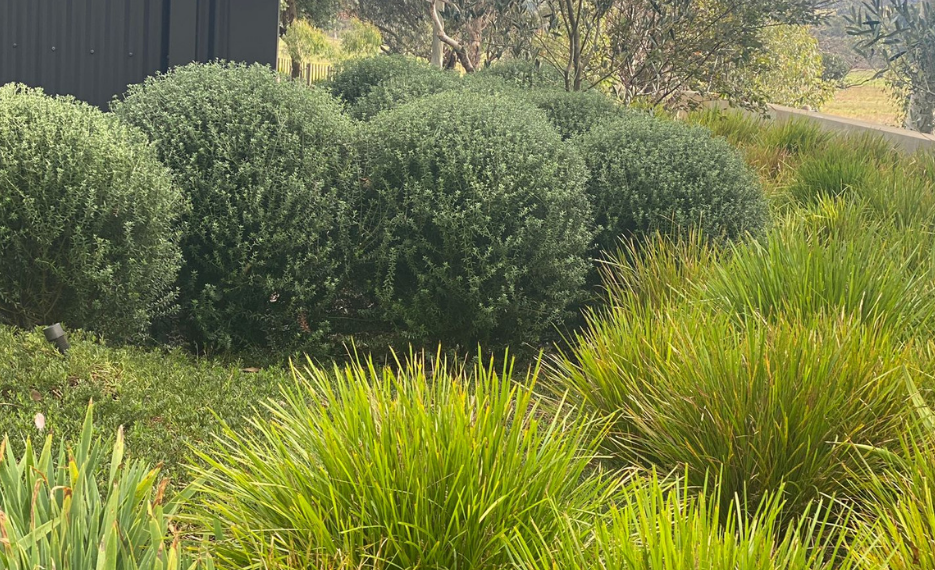
Westringia spheres: a native alternative to Buxus
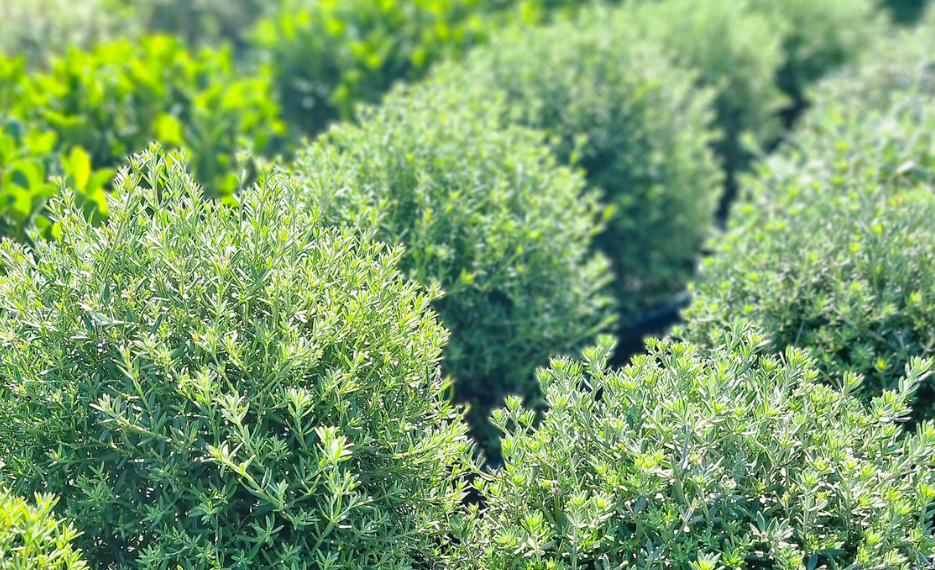
Clipped Westringia spheres are gaining ground in structured landscapes, offering landscapers an Australian native alternative to traditional Buxus (English Box).
With dense evergreen foliage and naturally rounded growth, Westringias clip beautifully into spheres while still bringing the toughness and versatility the genus is known for.
Depending on the cultivar, foliage can range from deep green to soft grey and variegated, giving landscapers more opportunity to introduce different colour and texture while retaining that neat, architectural shape.
Westringia spheres can work mass planted, repeated along pathways, positioned beneath feature trees or combined with looser grasses and groundcovers to create contrast between clipped and natural forms.
Westringia Grey Box, Smokey, Wynyabbie Gem, Jervis Gem and Funky Chunky can all lend themselves particularly well to this style of planting, but they’re certainly not the only Westringias that can be shaped.
Want more alternatives to traditional Buxus?
Read our guide to Topiary Sphere Alternatives – 10 Great Options for Australian Landscapes
Why are Westringias so useful in Australian landscape designs?
There’s a reason Westringia has become such a landscape staple.
Depending on the cultivar, it can be used for:
clipped spheres and structured planting
low and medium hedges
borders
mass planting
native and coastal landscapes
groundcovers
pots and raised planters
low-maintenance commercial landscapes
Most prefer full sun to semi-shade and perform well in free-draining soil. Once established, they generally have relatively low water requirements and many cope particularly well with strong winds, salt spray and coastal conditions.
Westringias can also be useful in dry, open shade beneath established trees, such as Gum Trees.
And despite the common names Native Rosemary and Coastal Rosemary, Westringia isn't the culinary rosemary used in cooking. The name comes from the narrow, rosemary-like foliage.
10 Westringia varieties to know
So, what’s the difference between them?
The answer often comes down to the finer details: foliage colour, mature size, growth habit, flower colour and how compact or spreading each cultivar naturally grows.
There is plenty of crossover in how Westringias can be used, but these differences can help you choose the right variety for the look, scale and function of your next landscape design.
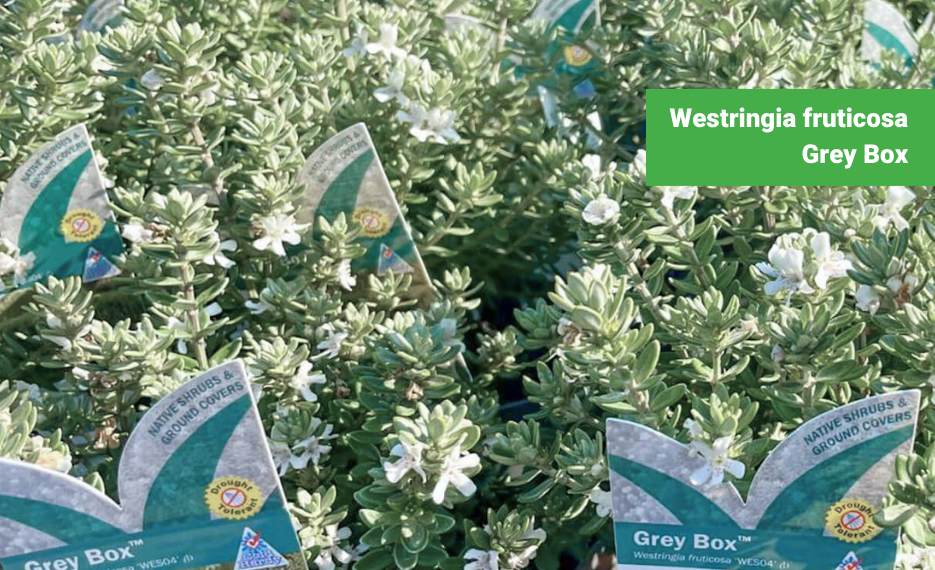
Westringia fruticosa Grey Box
THE COMPACT GREY ONE
Westringia Grey Box brings silvery-grey foliage, small white flowers and a naturally neat, rounded form.
It is one of the more compact Westringias, growing up to around 30-45cm high x 30-45cm wide. This makes it particularly useful if you want structure without too much height.
Use it for low hedging, borders, mass planting or clipped balls. Its soft grey foliage also creates useful contrast against darker green planting.
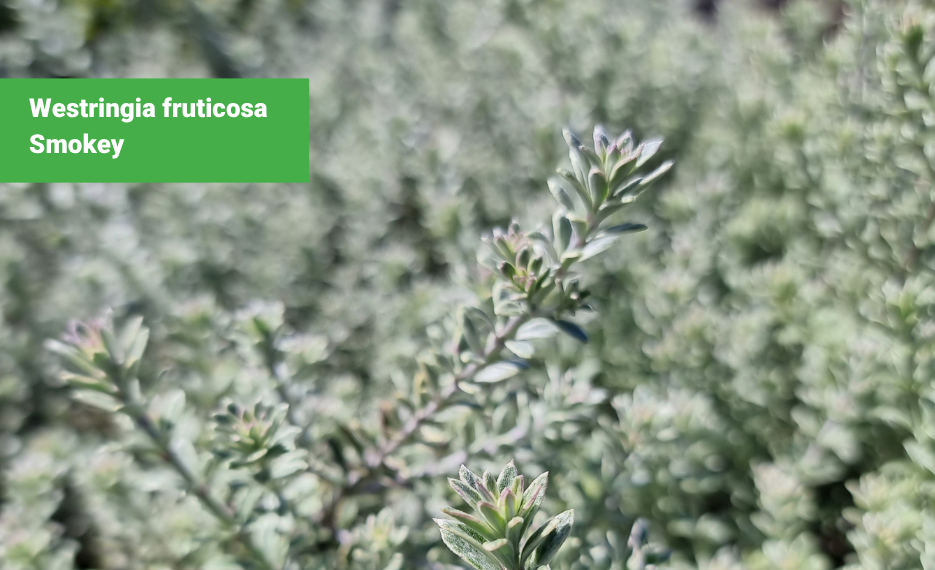
Westringia fruticosa Smokey
FOR MORE FOLIAGE CONTRAST
Westringia Smokey has lighter, more contrasting foliage than Grey Box, with grey variegation that stands out particularly well against darker greens.
It develops dense, rounded growth and produces small white flowers for much of the year.
Mass plant it, use it as a low hedge, leave it naturally rounded or clip it into spheres. It’s also a tough choice for coastal and exposed landscapes.
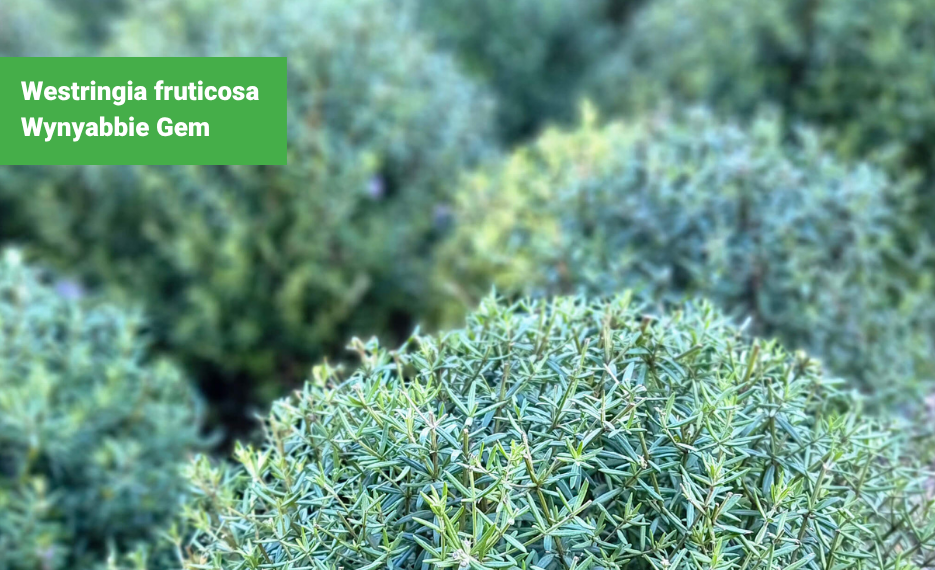
Westringia fruticosa Wynyabbie Gem
A GREAT ALL-ROUNDER
Wynyabbie Gem is one of those Westringias that can fit into just about any plant palette.
Soft grey-green foliage, small mauve flowers and dense growth give it plenty of landscape versatility.
It works as a hedge, in borders, mass planted or clipped into spheres, and can also be left to develop into a larger naturally rounded shrub.
If you’re looking for a reliable Westringia without a highly specialised growth habit, Wynyabbie Gem is a great all-rounder.
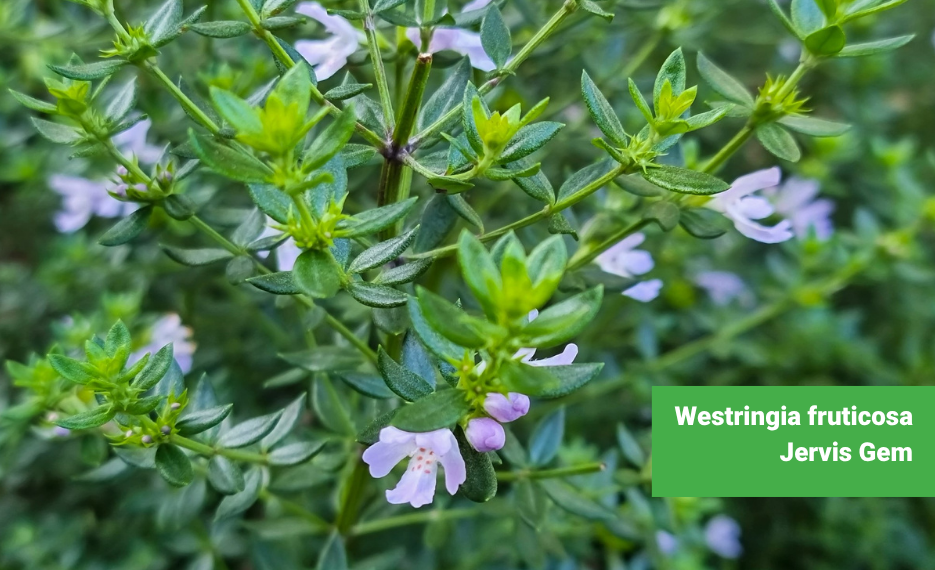
Westringia fruticosa Jervis Gem
NEAT, BUSHY AND MADE FOR SHAPING
Jervis Gem has dense, bushy growth with grey-green foliage and pale lilac flowers.
Its naturally neat form responds particularly well to clipping, whether you want a low hedge, rounded form or more structured sphere.
It’s another versatile option that can move easily between native, coastal and more contemporary landscape styles.
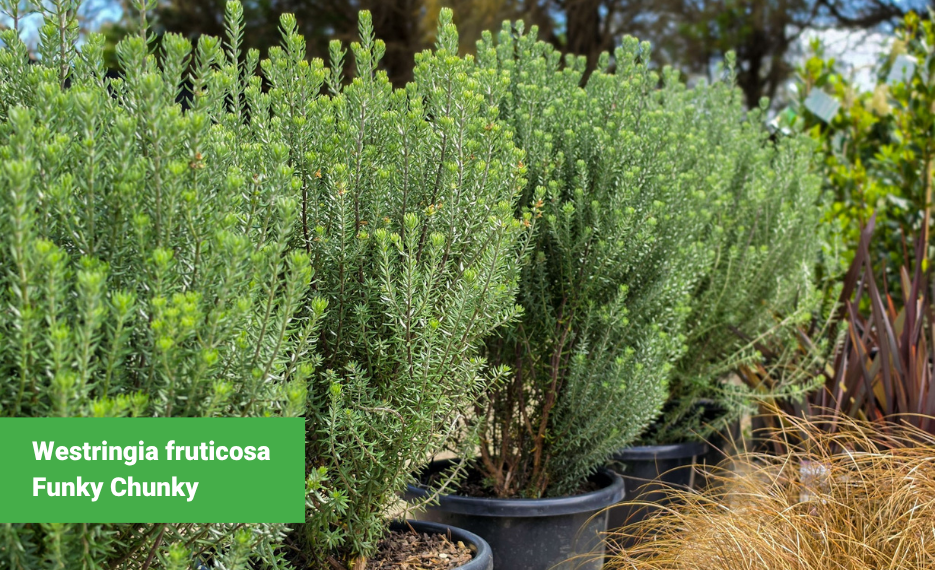
Westringia fruticosa Funky Chunky
A LITTLE CHUNKIER
As the name suggests, Funky Chunky has a slightly bolder foliage look than some other Westringias.
Its dense green-grey foliage gives the plant a more substantial appearance, while the growth remains naturally rounded and easy to shape.
Use it as a low hedge, rounded shrub or clipped sphere, or simply let the natural form do the work.
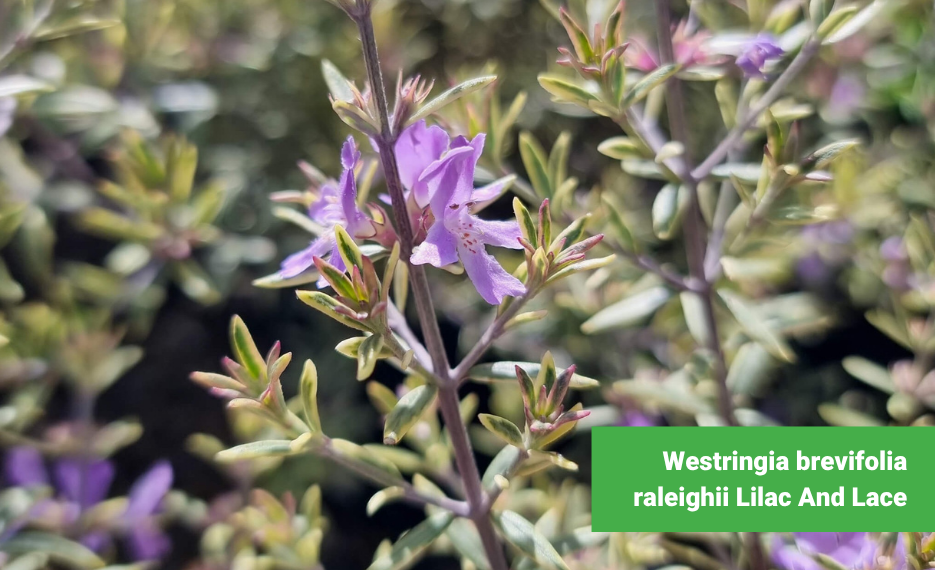
Westringia brevifolia raleighii Lilac And Lace
ALL ABOUT THE FOLIAGE
Lilac And Lace brings something quite different to the Westringia line-up.
Its grey, green and cream variegated foliage provides plenty of contrast and detail, complemented by small mauve flowers.
It forms a dense shrub and can still perform many of the same practical landscape roles as other Westringias, including hedging, mass planting and shaped forms.
It’s a good choice when you want foliage interest without relying on bright flower colour.
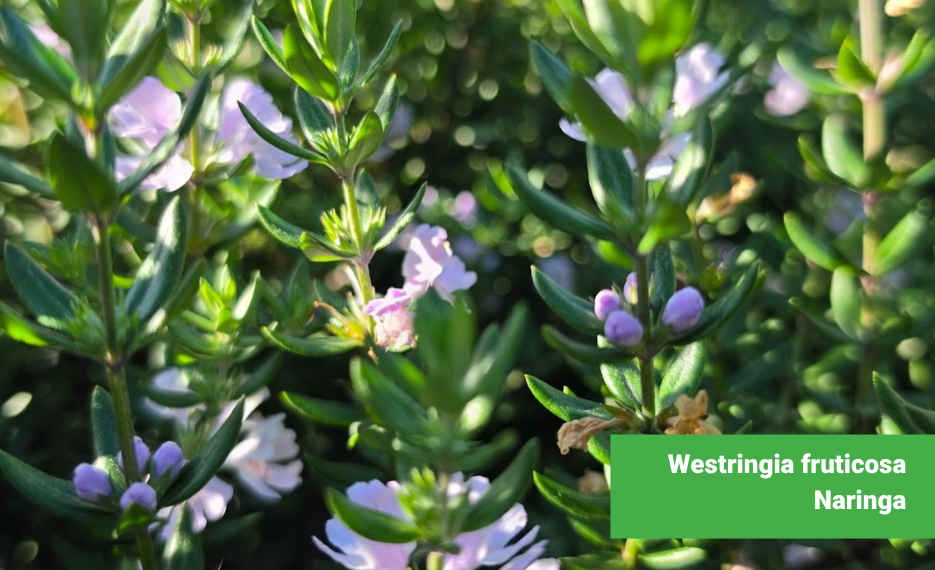
Westringia fruticosa Naringa
NEED A HEDGE? START HERE
If hedging is the job, Naringa deserves a spot high on the list.
It develops strong, dense growth and holds its shape particularly well as it matures, making it a reliable choice for structured hedging.
Keep it clipped for a lower, neat hedge or allow it to grow taller where more screening is required.
Small mauve flowers add another layer of interest, particularly through spring.
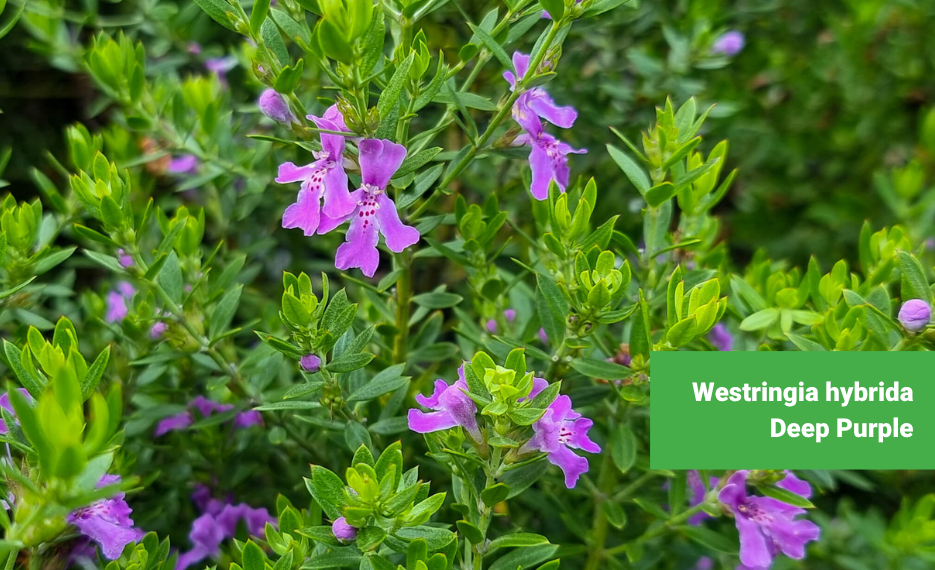
Westringia hybrida Deep Purple
WHEN YOU WANT THE FLOWERS TO STAND OUT
Westringia flowers are often subtle, but Deep Purple turns the flower colour up.
Its richer purple blooms create much stronger contrast against the deep green foliage than the softer white and lilac flowers of many other varieties.
It maintains a compact, rounded habit and can flower through much of the year, making it a good option when you want the toughness and structure of Westringia with a little more colour impact.
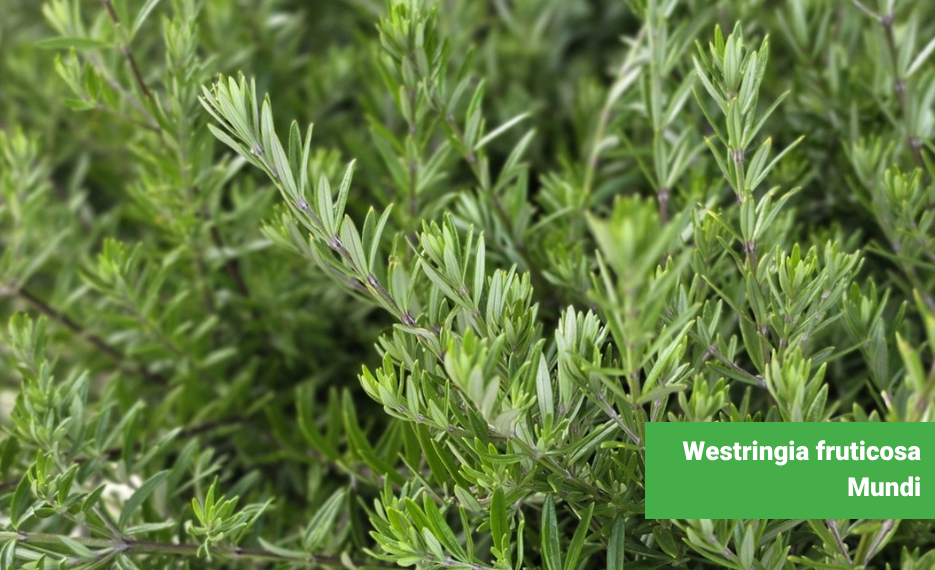
Westringia fruticosa Mundi
THE NO-FUSS GROUNDCOVER
Mundi takes Westringia down to ground level, growing to around 40–50cm high with a broad spread of approximately 1.5m.
Its low, spreading growth creates good coverage while maintaining a naturally tidy appearance, making it particularly useful where you want a hardy ground layer without constant pruning.
Think mass planting, embankments, roadsides, larger landscape beds and areas where low-maintenance coverage matters.
Small white flowers add seasonal interest without taking away from its main role as a practical, hard-working groundcover.
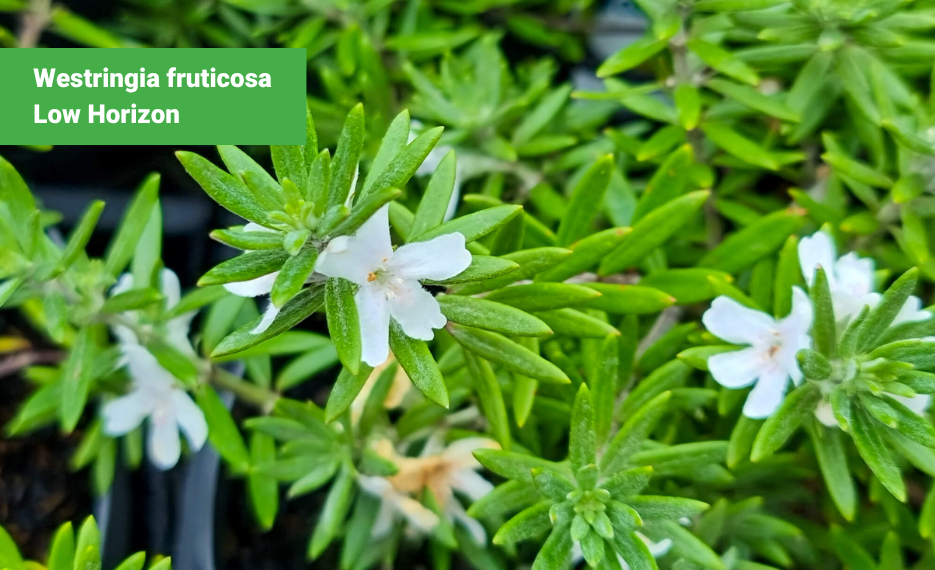
Westringia fruticosa Low Horizon
DENSE AND COMPACT GROUNDCOVER
Low Horizon stays lower to the ground than Mundi, growing to around 30cm high and approximately 70cm wide.
Its dense, compact and spreading habit creates low coverage without adding much height to the landscape.
Small white flowers appear in spring, while the low growth makes it particularly useful for borders, mass planting and areas where you want a neat native groundcover.
FAQs: choosing the right Westringia
1. Which Westringias are best for clipped spheres?
Many Westringias have naturally dense, rounded growth and respond well to clipping, so spheres aren't limited to one cultivar.
Westringia fruticosa Grey Box is a great compact option, while Westringia Smokey brings lighter, more contrasting foliage.
Westringia Wynyabbie Gem and Jervis Gem are excellent all-round options for larger spheres, while Westringia fruticosa Funky Chunky has dense growth with a slightly bolder foliage look.
Plantmark also stocks selected Westringias as pre-clipped topiary spheres, saving you both time and labour on your next landscape project.
For larger projects or quantities, get in touch with our Quotes & Orders team at your nearest Plantmark location. They can source the stock you need and organise delivery straight to your project site.
For more ideas, see our guide to Topiary Sphere Alternatives for Australian Landscapes.
2. Which Westringia is best for hedging?
Most shrub-form Westringias can be clipped into hedges, but Westringia fruticosa Naringa is particularly well suited to the job because of its dense growth and ability to hold its shape as it matures.
Westringia fruticosa Grey Box is a good option when a much lower hedge is required, while Westringia fruticosa Wynyabbie Gem, Jervis Gem and Smokey can also make effective hedges depending on the required height and style.
3. Which Westringia is best for groundcover?
Westringia fruticosa Mundi and Westringia fruticosa Low Horizon are the two standout groundcover varieties in this selection.
Mundi grows to around 40–50cm high and spreads to approximately 1.5m, making it useful where broader coverage is needed.
Low Horizon stays lower at around 30cm high and approximately 70cm wide, making it a good option where you want dense ground coverage with a more compact profile.
4. Which Westringia has the greyest foliage?
Westringia fruticosa Grey Box is an obvious choice for silvery-grey foliage.
Westringia fruticosa Smokey is even lighter and offers the strongest foliage contrast because of its grey variegation, while Westringia fruticosa Wynyabbie Gem and Westringia Jervis Gem have softer grey-green foliage.
5. Which Westringia has variegated foliage?
Westringia brevifolia raleighii Lilac And Lace has distinctive grey, green and cream variegated foliage.
Westringia fruticosa Smokey is another option where foliage contrast is important, with lighter grey variegation that stands out particularly well beside darker green plants.
6. Which Westringia has the strongest flower colour?
Westringia Deep Purple is the standout if flower colour is a priority, producing richer purple flowers than the softer white, lilac and mauve flowers typically associated with Westringia.
7. Are Westringias drought tolerant?
Most established Westringias are considered drought tolerant and have relatively low water requirements once established.
New plants still need regular watering while their root systems establish, particularly through hot and dry weather.
8. Are Westringias suitable for coastal landscapes?
Yes. Coastal tolerance is one of the reasons Westringia is commonly known as Coastal Rosemary.
Many cultivars handle wind, salt exposure and dry conditions well, making them useful for coastal gardens and exposed landscape projects.
9. Can Westringia grow in shade?
Westringias generally perform best in full sun to semi-shade.
Many can also handle dry, open or dappled shade beneath established trees, including gums. Avoid very deep shade where possible, particularly if flowering and dense growth are priorities.
10. Can Westringias be grown in pots?
Yes. Compact Westringias can work particularly well in pots and large planters.
Westringia Grey Box is an obvious choice where a smaller clipped form is required, while other varieties can be maintained in larger containers with regular pruning.
Good drainage is important, and container-grown plants will generally require more regular watering than Westringias planted in the ground.
Find Westringias at Plantmark
Plantmark stocks a wide range of Westringia varieties across our wholesale nurseries in Melbourne, Brisbane and the Gold Coast, with varieties, pot sizes and availability changing throughout the season.
Whether you need clipped spheres, hedging plants, groundcovers or larger quantities for a landscape project, explore the range through the Plantmark Plant Finder or speak with our Quotes & Orders team about sourcing the plants you need.
Wholesale nursery. Trade only.
Leave your comment